Baking at high altitudes can be a challenge for many home bakers. The lower air pressure affects how ingredients behave, leading to unexpected results. Understanding these adjustments is crucial for successful baking in elevated areas.
Many bakers struggle with recipes that work perfectly at sea level but fail at higher elevations. Knowing how to modify your ingredients and techniques can make all the difference in achieving that perfect loaf or cake.
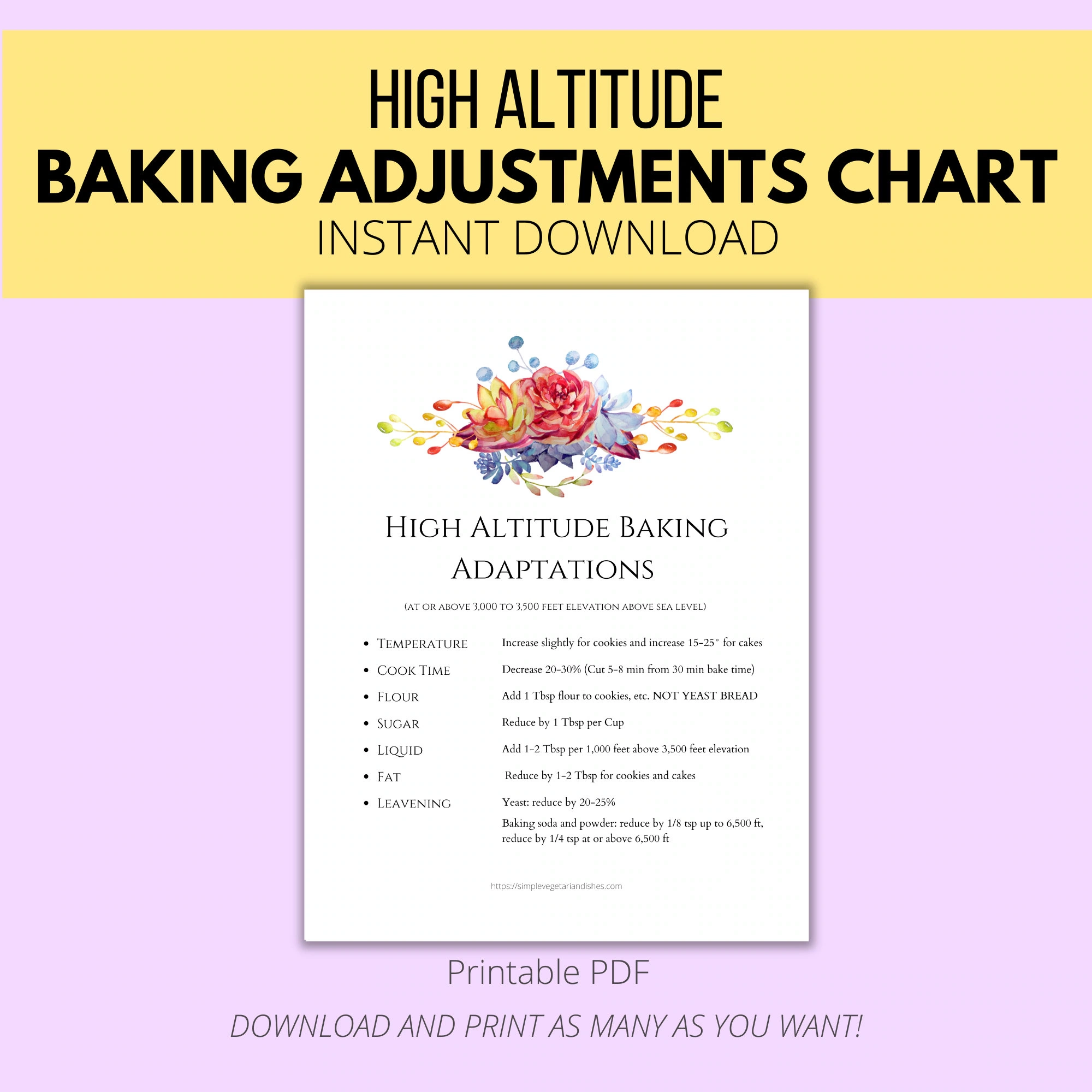
High Altitude Baking Adjustments Chart Printable
High Altitude Baking Adjustments Chart Printable
Using a High Altitude Baking Adjustments Chart Printable can simplify your baking process. This chart provides essential modifications for flour, sugar, and liquid amounts, ensuring your baked goods rise beautifully and maintain their texture.
For instance, reducing sugar can help prevent overly sweet or dense results. Additionally, increasing flour slightly can provide the necessary structure to your baked items. These simple tweaks can transform your baking experience.
Another key adjustment involves oven temperature. Increasing the temperature by 15 to 25 degrees Fahrenheit helps set the structure of your baked goods faster, preventing them from collapsing. This is especially important for cakes and soufflés.
Finally, remember to monitor your baking times closely. High-altitude baking often requires shorter cooking times due to the quicker evaporation of moisture. Keeping an eye on your creations will ensure they come out perfectly every time.
With the right adjustments and a handy chart, high-altitude baking can be enjoyable and rewarding. Embrace these tips to elevate your baking skills and create delicious treats that everyone will love.